
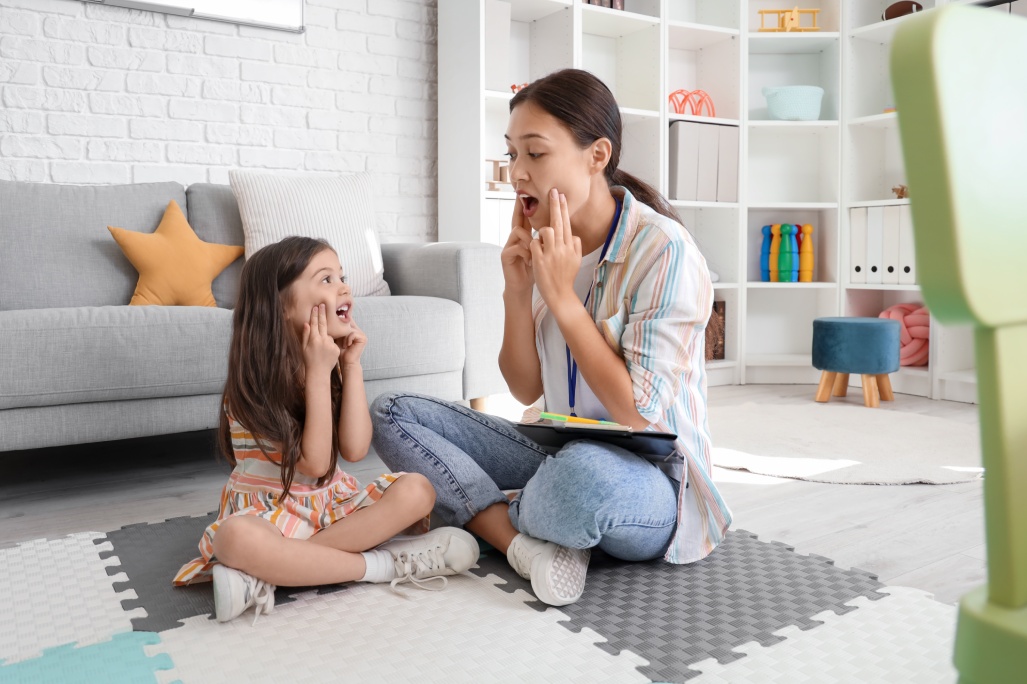
In the Rio Grande Valley, growing up with two languages is the standard. In Hidalgo County, 80.1 percent of residents age five and older speak a language other than English at home, and for most of those families, that language is Spanish. Children move between English at school and Spanish at home, at church, and at their grandmother’s kitchen table, often in the same sentence.
That reality shapes how speech therapy should be delivered here. Learn how a bilingual speech therapist helps children in McAllen and the Rio Grande Valley develop strong communication skills in both English and Spanish, from the first evaluation through the strategies used in each session, and what the research actually says about raising a child with two languages.
Why a bilingual speech therapist matters in the Valley
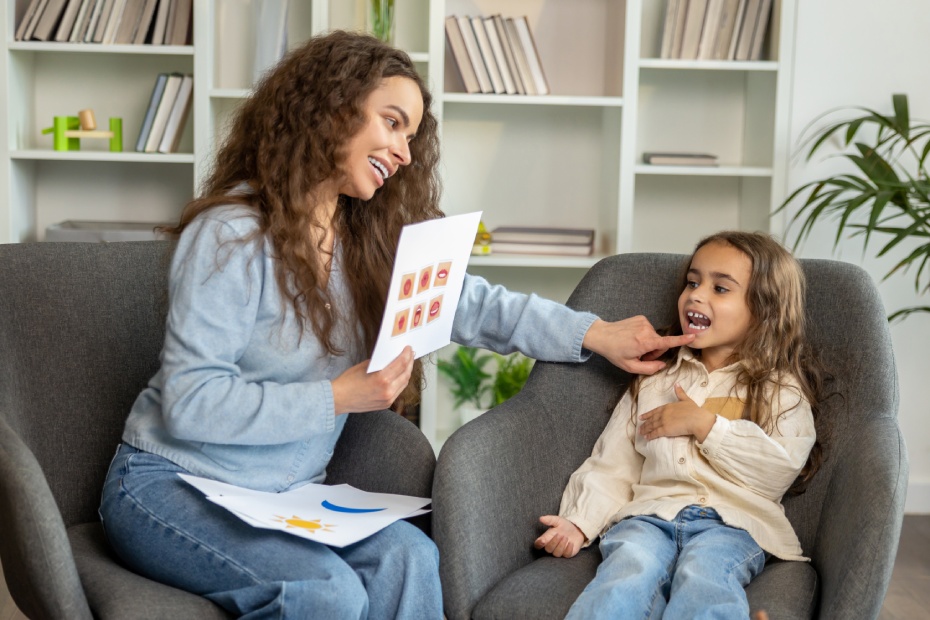
A child’s language is not a switch you flip at the clinic door. It carries their relationships, their sense of humor, and their identity. When therapy happens only in a language a child does not use at home, two things tend to go wrong: progress does not transfer to daily life, and the family cannot reinforce it between sessions.
The American Speech-Language-Hearing Association is direct about this. Multilingualism, ASHA states, is not a communication disorder. However, it is a significant consideration in evaluation, and failing to account for it can lead to misdiagnosis. A bilingual speech therapist is trained to tell the difference between a child who is learning differently and a child who has a disorder.
Step one: a bilingual speech evaluation looks at both languages
A proper bilingual speech evaluation does not test a child in English and call it a day. ASHA’s guidance is that clinicians should record speech and language samples in all languages the child uses, or use a trained interpreter when the therapist does not speak one of them.
The reason is the distinction at the center of bilingual practice: a language difference is not a language disorder. Patterns that arise from one language influencing another, such as a Spanish-dominant child applying Spanish sounds or sentence structure to English, are normal forms of transfer. A genuine speech or language disorder shows up in both languages, even though it may look different in each.
This matters enormously in the RGV, where a child can easily be flagged as delayed simply because the test was in their weaker language. A complete evaluation typically includes:
- A language history: which language is spoken by whom, how much, and since when.
- Speech and language samples in English and Spanish, not one or the other.
- Parent and caregiver input about how the child communicates at home.
- A hearing screening, since hearing issues affect both languages at once.
- Comparison against peers with a similar language background, rather than against monolingual norms.
Step two: setting goals around the child and the family
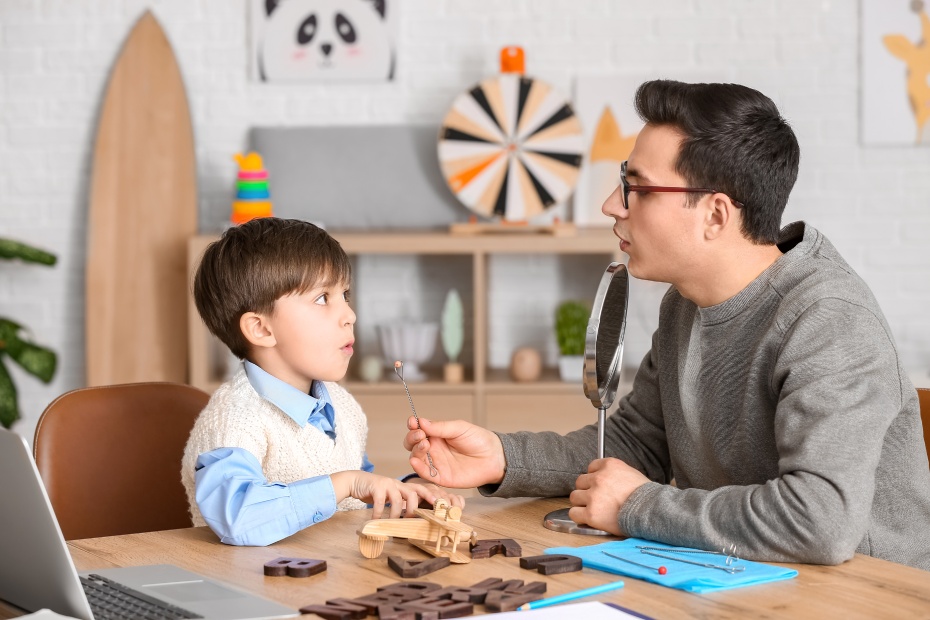
Once an evaluation is complete, goals are built around how the child actually lives. A four-year-old who needs to ask for help at a Spanish-speaking daycare and answer questions in an English pre-K classroom needs both skills, not a plan that quietly picks one.
Good bilingual goals usually account for a few things at once. They target the specific sounds or structures that are difficult in each language, since Spanish and English do not share the same inventory of sounds. They build vocabulary across both languages rather than counting words in only one. And they set realistic expectations about balance, because a child’s dominant language shifts over time with exposure.
What parents can practice at home, in the language they are most comfortable in, is often what determines how fast a child progresses.
Step three: strategies a bilingual speech therapist uses
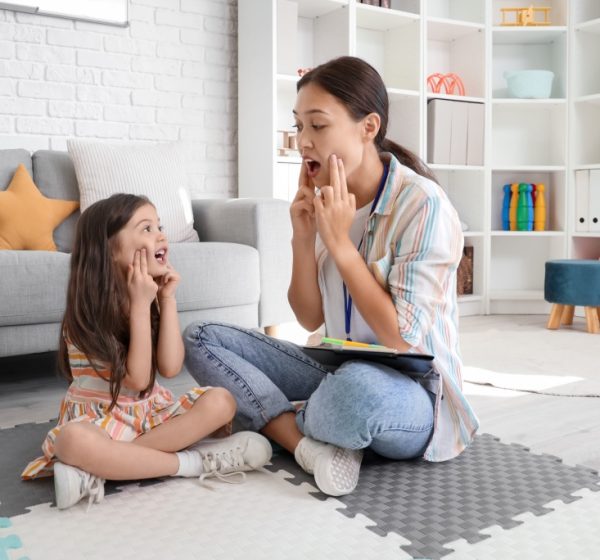
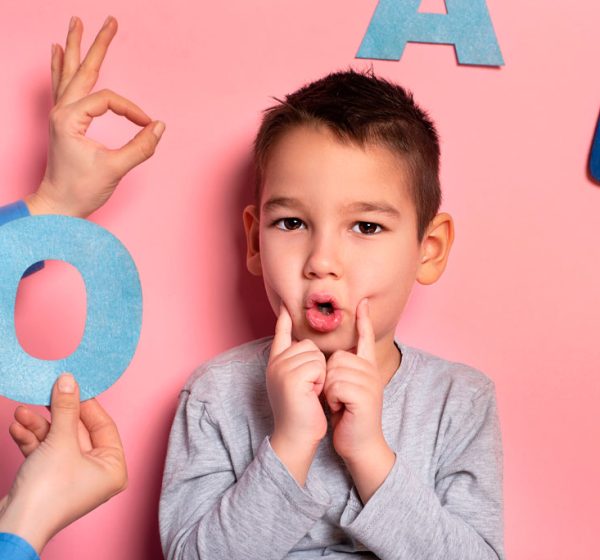
Pediatric sessions are play-based, which is true in any language. What changes in bilingual therapy is the structure around that play:
- Therapy in the language of the target skill. If a child is working on requesting at home, that work happens in the home language so it transfers to the dinner table.
- Parent coaching in the caregiver’s stronger language, so families leave with something they can actually do rather than instructions they half-followed.
- Allowing code-switching in session. Children who mix languages are not confused, and correcting it wastes energy better spent on real targets.
- Building concepts once, labeling twice. A child who learns what an object does can attach both an English and a Spanish word to it, which is faster than teaching the concept twice.
- Working with an interpreter when needed. ASHA considers this standard practice, not a workaround.
- Coordinating with the school. Classroom expectations in English and home expectations in Spanish should point in the same direction.
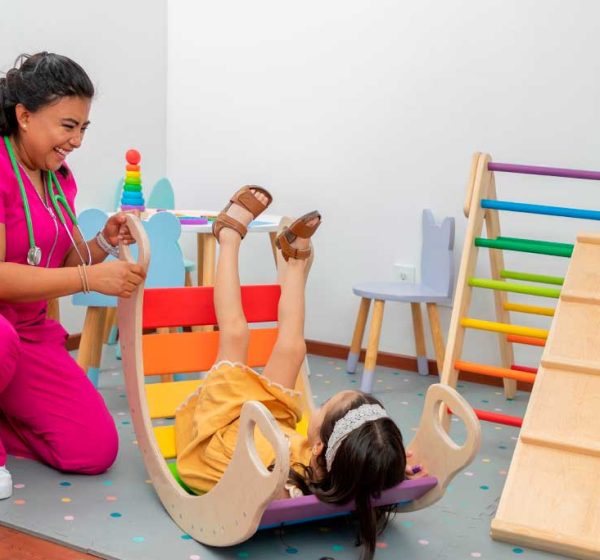
For families whose children are also working on motor or daily-living skills, this coordination extends across disciplines too. Speech, occupational, and physical therapy tend to pull in the same direction when they share a plan. You can see how the full range of pediatric therapy services fits together, or read more about what pediatric speech therapy involves specifically.
Four myths about bilingual speech therapy for children
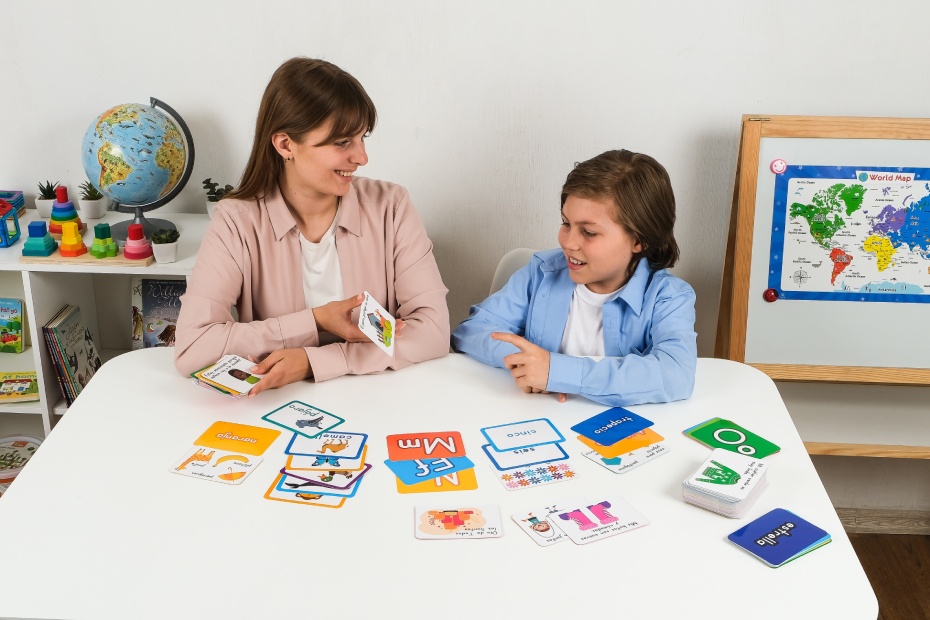
Myth 1: Learning two languages causes speech delay
It does not. ASHA states plainly that raising a child with more than one language will not confuse your child, cause or worsen speech or language problems, or slow down their learning. Most multilingual children use their first words by around age one and two-word phrases by age two, the same timeline as anyone else.
Myth 2: We should switch to English only at home so our child catches up
The American Academy of Pediatrics notes that maintaining the heritage language supports academic success rather than competing with it. Practically speaking, a parent who switches to a language they are less fluent in gives their child less rich input, fewer stories, and fewer natural conversations, which is the opposite of what a child with a language delay needs. ASHA’s recommendation is to speak with your child in the language you are most comfortable using.
Myth 3: Mixing languages means my child is confused
Code-switching is a skill, not a symptom. Using words from two languages in one sentence is a normal part of bilingual development, and by about age three most multilingual children can separate their languages and choose the right one for the person they are talking to. Adults in the RGV do this constantly, and nobody worries about them.
Myth 4: Falling behind in English proves there is a disorder
Not on its own. A child who is behind classmates in English may be a typically developing child with less English exposure, and many children go through a quieter stretch when they first start school in a new language. The only way to know is an evaluation in both languages. If the difficulty appears in Spanish as well as English, that points to a disorder. If it appears only in English, it usually points to exposure.
When to ask for a bilingual speech evaluation
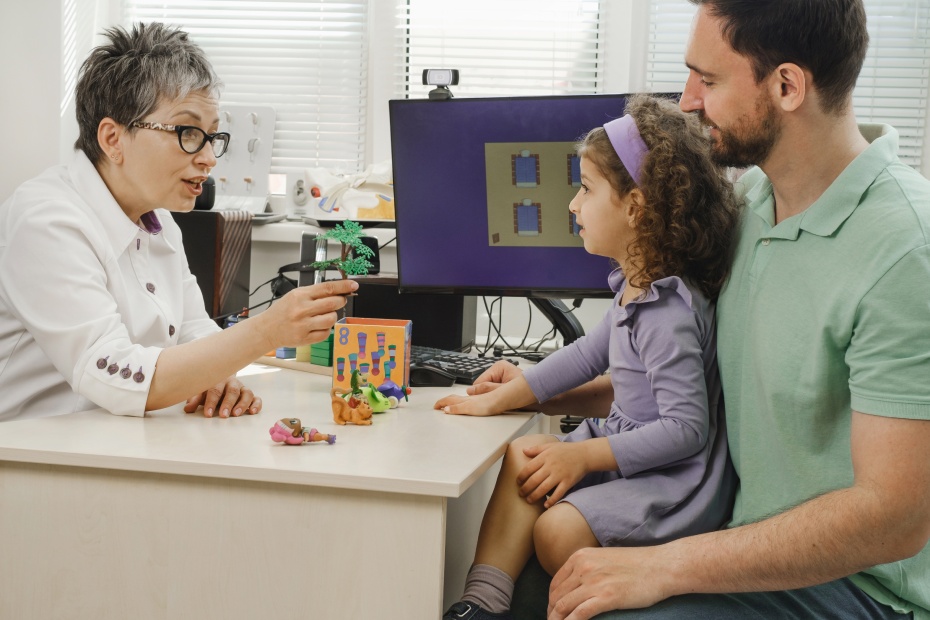
The milestones for bilingual children are the same as for everyone else, so the usual signs still apply: no words by around 15 months, no two-word phrases by two, speech that unfamiliar people cannot understand by age three, frustration or giving up when trying to communicate, or losing skills a child previously had. Our post on the early signs of speech delay in toddlers goes through these by age.
The important part is not waiting for a child’s English to catch up before asking. The National Institute on Deafness and Other Communication Disorders describes the first three years of life as the most intensive period for acquiring speech and language, which is precisely the window families lose while they wait and see.
Families with children under three can also contact Texas Early Childhood Intervention, which serves children from birth to 36 months. Evaluation and assessment are free, other services follow a sliding scale based on income and family size, and no child is turned away because a family cannot pay.
Bilingual speech therapy at Tip of the Tongue
Tip of the Tongue Rehab provides speech, occupational, and physical therapy for children across the Rio Grande Valley, with locations in Pharr and Alton serving families from McAllen, Mission, Edinburg, and the surrounding communities.
If you have been told to wait or told to drop Spanish at home, it is worth getting a second opinion from someone who evaluates in both languages. Call 956-787-3737 or contact us to talk about your child’s specific needs, or schedule an evaluation online. Each child is unique. We help them succeed.